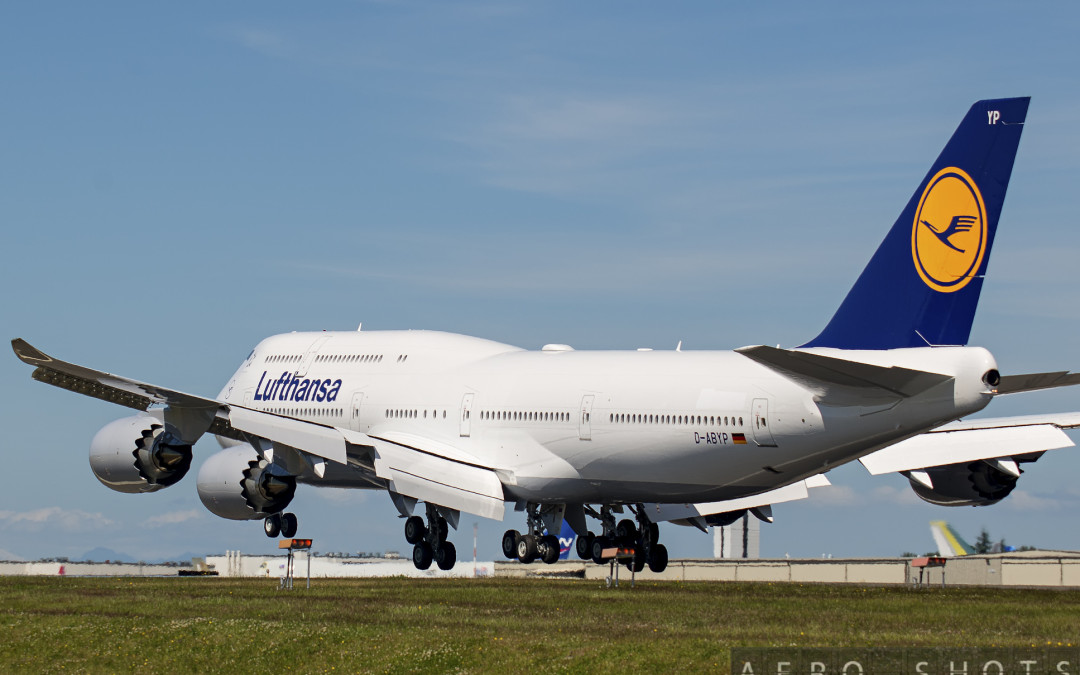
LUFTHANSA Revises Advance Seat Reservation (ASR) Fee Structure For Exit Rows

LUFTHANSA Revises Advance Seat Reservation (ASR) Fee Structure For Exit Rows

Lufthansa has updated its International long haul Advance Seat Reservation (ASR) cost structure from a flat rate model to a variable model based on destination.   Up until now, passengers could pay €70 in order to reserve an exit row or other seat with more leg room for their flight.   This was a flat rate across all of Lufthansa’s Intercontinental routes.   With the new program, the rates have been adjust to reflect the distance of the flight which means that in some cases the ‘ASR’ cost went down and in certain cases the ‘ASR’ fee is higher.

The new fee structure takes effect on October 1.   Any ASR purchase made on or after October 1 is subject to this adjusted policy regardless of when the ticket was booked.

Additionally, these changes apply only to Lufthansa’s lowest economy booking classes including T, L, K and S fares as far asinternational flights are concerned.   Miles & More HON and Senator level members will continue to be offered the extra leg room / exit row seats for free.    Lufthansa’s remaining ASR fee schedule remains the same at this point.

The information has not yet been updated on Lufthansa.com but should be reflected in the next day or 2.

Here is a breakdown by region / airport and the new pricing for each grouping:

Mid-East & Northern Africa is reduced to €50:

Abuja (ABV), Accra (ACC), Addis Ababa (ADD), Abu Dhabi (AUH), Bahrain (BAH), Dammam (DMM), Doha (DOH), Dubai (DXB), Tehran (IKA), Jeddah (JED), Kuwait City (KWI), Luanda (LAD), Lagos (LOS), Muscat (MCT), Port Harcourt (PHC), Riyahd (RUH), Malabo (SSG)

Certain North & South America / Asia destinations remain at €70:

Atlanta (ATL), Bangkok (BKK), Bangalore (BLR), Mumbai (BOM),  Caracas (CCS), Denver (DEN), Delhi (DEL), Dallas Ft. Worth (DFW), Newark (EWR), Washington Dulles (IAD), New York (JFK), Kuala Lumpur (KUL), Chennai (MAA), Orlando (MCO), Chicago (ORD), Philadelphia (PHL), Pune (PNQ), Seattle (SEA), Montreal (YUL), Toronto (YYZ), Astana (TSE).

Other North & South America / Asia destinations increase to €90:

Capetown (CPT), Buenos Aires (EZE), Rio de Janiero (GIG), Sao Paulo (GRU), Tokyo Haneda (HND), Tokyo Narita (NRT), Hong Kong (HKG), Johannesburg (JNB), Kansai (KIX), Los Angeles (LAX), Mexico City (MEX), Miami (MIA), Nagoya (NGO), Nanjing (NKT), Beijing (PEK), Shanghai (PVG), Seoul Gimpo (SEL), San Francisco (SFO), Shenyang (SHE), Singapore (SIN), Qingdao (TAO), Vancouver (YVR).

If you have a decent grasp on Geography, you’ll notice that the rates were adjust based on the proximity of the destination.  The furthest routes recognized an increase while the shortest routes had their ASR fees reduced.  At first glance, this new pricing policy seems to equalize the cost structure and I think is an overall improvement.
H/T:  Oliver2002 & FlyerTalk’s Lufthansa Thread
Invalid request error occurred.

European Aviation Safety Agency (EASA) Ruling Allows Full Use Of Mobile Devices During All Phases Of Flights

European Aviation Safety Agency (EASA) Ruling Allows Full Use Of Mobile Devices During All Phases Of Flights

The EASA has ruled that European airlines can permit their passengers to use their Mobile Devices in a ‘connected’ mode throughout all phases of flight.   This means that passengers would no longer have to put their phone or mobile device into ‘Airplane Mode’ once the aircraft doors are closed.

This ruling does not mean that passengers can immediately start adhering to this new policy.  According to the EASA, it will be up to each airline to implement their own strategy and policy.  Additionally, each airline would need to be certified that its aircraft are not ‘distracted’ by cellphones and other devices being connected during flight.

This can lead to the opening of Pandora’s Box and at least expand the debate regarding the use of cell phones to make phone calls from an aircraft.   In most surveys, passengers have opposed the idea of placing phone calls while in flight due to the amount of noise and chatter it could produce in a cabin.  However, if this policy is used appropriately and not abused, it will be a welcomed by passengers.


Lufthansa Pilot Strikes On The Horizon

Lufthansa Pilot Strikes On The Horizon

In what is becoming a broken record of sorts, the union representing Lufthansa’s pilots has once again announced that strikes are imminent.   They suggested that they would provide advanced warning ahead of any walkouts.

The latest threat comes on the heels of a Lufthansa proposal that was rejected by the union.    At the heart of the union’s whining is the fact that they are demanding pilots become eligible to receive retirement benefits as soon as age 55.   Lufthansa on the other hand is requesting that pilots wait until age 60 before being able to tap full retirement benefits.

In my opinion Lufthansa’s position seems reasonable.   Most reasonable people will agree that 60 is a suitable target for a retirement age.   As a matter of fact, if you asked most people today,  they would love the idea of retiring at age 60 but many cannot afford to do so thanks to our wonderful economy over the last several years that had gutted many retirement dreams.

I suspect that the union will lose their argument in a court of public opinion as most reasonable people understand that retirement at 55 should not be a right.   However it appears that unions don’t care what the public thinks of them when they uproot travel plans and create a myriad of inconveniences for the very same people that they may represent.

But I digress….Can you figure out whose side I’m on? 😉